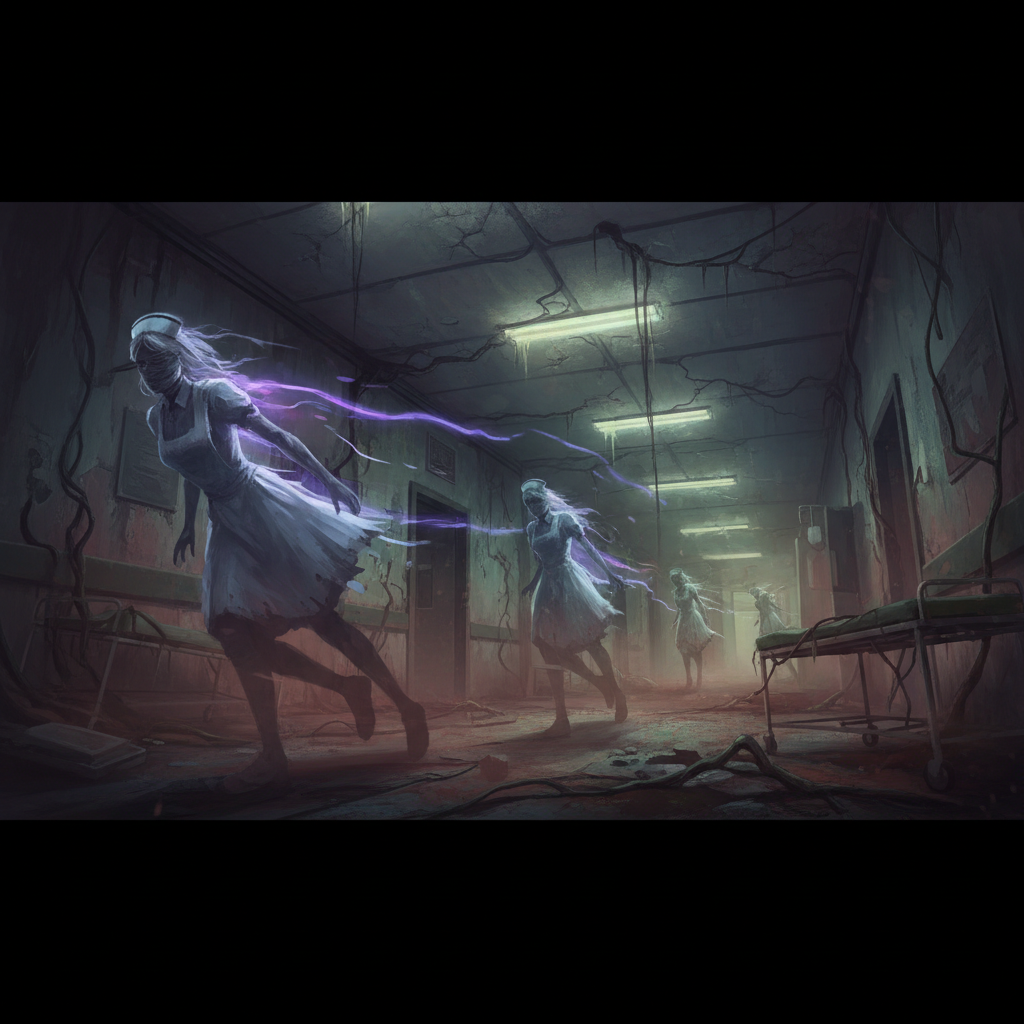
The Nurse’s blink mechanics revolve around her unique power, “Spencer’s Last Breath,” which allows her to teleport across the map, even through obstacles. This ability is activated by charging it, with the distance of the blink directly corresponding to how long the power is charged.
Spencer’s Last Breath Overview
The Nurse, Sally Smithson, utilizes her power, Spencer’s Last Breath, to teleport short to great distances, effectively cutting off survivor routes and closing gaps. This power is a core component of her gameplay, defining her as a “very hard” difficulty Killer due to its high risk, high reward nature. When activated, The Nurse gains an alternate movement speed of 13.33 m/s during a blink, significantly faster than her base movement speed of 3.85 m/s. However, using this power incurs a period of fatigue, requiring her to recover before she can blink again. Mastering the timing and aiming of these blinks is crucial for success with The Nurse.
Blink Execution and Range
The distance The Nurse travels during a blink is determined by how long Spencer’s Last Breath is charged. A quick, instant tap will result in a melee-range blink, while a fully charged blink can cover approximately 30 meters. By default, The Nurse is granted one primary blink and one additional “Chain Blink.” This allows her to perform a second teleport shortly after the first. The Nurse can blink through walls and other environmental obstacles, making her a formidable chase Killer. When aiming, it’s important to consider the charge time for the desired distance, as over- or under-charging can lead to missing your target or landing in an unfavorable position. While some players might experience seemingly “lucky” blinks that land near survivors, the mechanic itself is based purely on charge duration and direction, not automatic targeting.
Fatigue and Chain Blinks
After using her blink power, The Nurse suffers from fatigue, during which she cannot use her power again and her movement speed is reduced. This recovery period is a critical vulnerability that survivors can exploit. The “Chain Window” refers to the amount of time available to charge and release a subsequent blink before the fatigue state begins. Increasing this chain window through add-ons allows The Nurse more time to aim and execute follow-up blinks, making her more effective in chases. By default, The Nurse can perform 2 blinks in a chain (one primary, one chain blink). Some add-ons can increase the maximum number of chain blinks, extending her teleporting capabilities before fatigue sets in. It is vital to manage this chain window effectively to avoid stunning yourself unnecessarily and to maintain pressure on survivors.
Add-ons and Their Effects
The Nurse’s add-ons significantly alter her blink mechanics, affecting various aspects like blink charges, fatigue duration, and even her base movement speed. While many add-ons can be detrimental if not understood, some provide powerful advantages.
| Rarity | Add-on Name | Effect |
|---|---|---|
| Ultra Rare | Matchbox | Removes 1 Blink charge, but increases The Nurse’s base movement speed to 4.2 m/s. |
| Ultra Rare | Torn Bookmark | Adds 1 Blink charge, but blinks are restricted to locations in The Nurse’s line of sight. |
| Very Rare | ”Bad Man’s” Last Breath | Hitting a survivor with a successful Blink attack grants The Nurse the Undetectable status for 16 seconds. This effect has a 60-second cooldown. |
| Very Rare | Campbell’s Last Breath | After reappearing from a fully charged Blink, The Nurse immediately Blinks at half charge in the direction she is currently facing. |
| Very Rare | Jenner’s Last Breath | After blinking, allows The Nurse to immediately Blink back to her original position by pressing the Power button again. |
Some add-ons, like the Matchbox, trade a blink charge for increased base movement speed, which can be useful for covering ground between chases. The Torn Bookmark adds a blink charge but removes the ability to blink through walls, drastically changing her playstyle. Other add-ons, such as the “Bad Man’s” Last Breath, provide tactical advantages post-blink, like the Undetectable status, while Campbell’s Last Breath offers a unique double-blink mechanic after a full charge. Jenner’s Last Breath provides a quick return to the initial blink location, useful for mind games. Understanding how each add-on modifies the core blink mechanic is key to effectively customizing The Nurse for different strategies. Many add-ons, particularly those that reduce “accuracy,” can make blinks less predictable and thus harder to control, often making them worse rather than better for inexperienced players.
FAQ
How does the Nurse’s blink distance work? The distance of The Nurse’s blink is directly proportional to how long you charge her power, Spencer’s Last Breath. A brief tap results in a short-range blink, while a full charge covers approximately 30 meters.
What is a “Chain Blink”? A Chain Blink is a secondary blink that The Nurse can perform immediately after her initial blink, within a specific “Chain Window.” By default, she has one additional Chain Blink, allowing for two consecutive teleports before fatigue.
What is “Chain Window” and why is it important? The “Chain Window” is the limited time frame you have to charge and release a subsequent blink after a previous one, before The Nurse enters a fatigue state. A longer chain window, often provided by add-ons, gives you more time to aim and execute follow-up blinks, which is crucial for effective multi-blink plays.
Do Nurse blinks automatically land near survivors? No, The Nurse’s blinks do not automatically land near survivors. The landing spot is determined solely by the direction and charge duration of the blink. Any instance of landing near a survivor is due to player aiming and estimation.
What is “Accuracy on landing” for Nurse add-ons? Add-ons that affect “Accuracy on landing” typically introduce an offset to the blink, causing you to land slightly to the side of your intended target. Generally, reducing accuracy is considered detrimental, as it makes blinks less precise and harder to control.