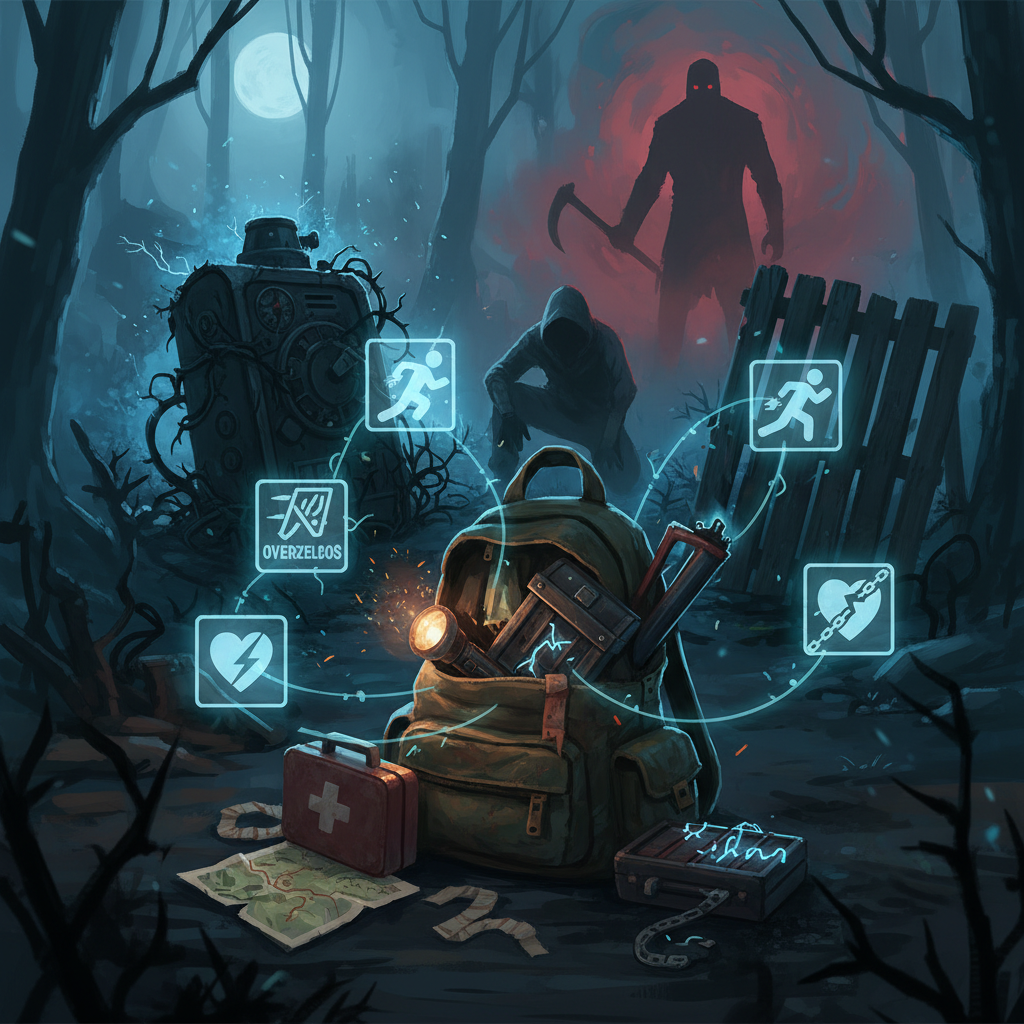
For solo queue in Dead by Daylight, the most dependable starting point is a build featuring Sprint Burst, Windows of Opportunity, Deja Vu, and Kindred. This combination provides essential information, escape tools, and objective guidance without requiring team coordination.
Quick Picks for Solo Queue
Navigating solo queue in Dead by Daylight presents unique challenges, primarily due to the lack of communication with teammates. The best survivor builds for solo queue prioritize perks that offer self-sufficiency, information, and ways to influence the trial positively, even when teammates are unpredictable. These builds aim to provide a clear plan when trials become chaotic, offering useful information, distance in chases, protection after being unhooked, or safer generator choices. As of June 22, 2026, the meta emphasizes versatility and problem-solving over highly specialized roles that depend on perfect team synergy.
Here are some top recommendations for solo queue survivors:
| Build Category | Perks | Key Benefit |
|---|---|---|
| Best All-Around | Sprint Burst, Windows of Opportunity, Deja Vu, Kindred | Information, distance, generator direction |
| Best Solo Queue (Playhub) | Sprint Burst, Kindred, Deja Vu, We’ll Make It | Information, support, self-sufficiency |
| Best No-DLC Start | Kindred, Deja Vu, Hope, We’ll Make It | Teaches fundamentals, accessible perks |
| Best for Being Tunneled | Decisive Strike, Off the Record, Dead Hard, Unbreakable | Anti-tunnel layers, recovery |
| Best for Generators | Hyperfocus, Stake Out, Deja Vu, Built to Last | Focused generator pressure |
These builds are recommendations based on their effectiveness in live trials as of June 2026. The most effective build is ultimately one you can operate under pressure, adapting to various map conditions and killer strategies.
Balanced Solo Queue Build
The “Balanced Solo Queue” build, consisting of Sprint Burst, Windows of Opportunity, Deja Vu, and Kindred, is considered a meta survivor build because it addresses several common solo queue problems without demanding perfect timing or communication. Sprint Burst is a clean escape tool, allowing for quick separation from the killer before a chase escalates. This perk requires careful management to preserve it for crucial moments, as walking between objectives can feel slow to some players. For those who dislike this limitation, Lithe from the “Lithe Looping” build (Build 6) can be an alternative, offering a burst of speed after fast vaulting.
Windows of Opportunity provides crucial resource knowledge, highlighting nearby pallets and vaults. This allows survivors to plan their chase routes effectively, avoiding guessing and leading them towards usable resources. Deja Vu assists with safer generator choices by revealing the three generators positioned closest together, preventing tight three-generator finishes that can be disastrous in the late game. It also provides a 6% repair-speed bonus when working on one of these generators. Finally, Kindred turns hook states into actionable information for the entire team. When a survivor is hooked, Kindred shows the auras of other survivors and can reveal the killer near the hook. When you are hooked, this information is shared with your teammates, helping to prevent multiple survivors from abandoning generators for the same save, or conversely, ensuring someone goes for the save when needed. This comprehensive approach makes it an excellent, practical loadout for most solo players.
Anti-Tunnel and Objective Builds
Solo queue often exposes survivors to tunneling, where the killer repeatedly targets a recently unhooked player. The “Post-Unhook Protection” build (Build 2) is specifically designed to counter this. It includes Decisive Strike, Off the Record, Dead Hard, and Unbreakable. Off the Record provides a window of protection and hides the survivor’s aura after being unhooked, though conspicuous actions can disable parts of this protection. Decisive Strike makes an immediate re-pickup costly for the killer by allowing a four-second stun if activated under specific conditions. Unbreakable offers one self-recovery opportunity if slugged, and Dead Hard can extend chase time by turning a well-timed swing into more distance. It’s crucial to remember this build is for resetting and forcing the killer to make target decisions, not for aggressive plays like body-blocking or immediately returning to generators. This build has limited objective value in matches where tunneling isn’t occurring.
For survivors who want to focus on generators, the “Toolbox Skill-Check Build” (Build 4) is highly effective. It uses Hyperfocus, Stake Out, Deja Vu, and Built to Last. Stake Out can reliably feed Great Skill Check value, which Hyperfocus then rewards, boosting repair progression. Deja Vu helps prevent a problematic late-game generator cluster, and Built to Last can restore an item, such as a toolbox, after its locker condition is met. This build thrives when bringing a toolbox with appropriate add-ons. However, it offers no chase safety, so planning an escape route before committing to a generator is vital. Its effectiveness diminishes if skill checks are frequently missed, no item is brought, or if a killer perk removes your toolbox.
Free-to-Play Options
For new players or those without access to DLC characters, the “Free Fundamentals” build (Build 3) offers a solid starting point. This build consists of Kindred, Deja Vu, Hope, and We’ll Make It. Kindred and Deja Vu serve the same crucial informational and objective guidance roles as in other solo queue builds, helping to prevent common solo-queue errors like multiple survivors going for the same save or poor generator spread. We’ll Make It rewards a safe rescue with rapid teammate healing, allowing for quick recovery after an unhook. Hope is a late-game perk, providing a reserved speed boost during the exit-gate phase. While it won’t help in an early chase, it offers a powerful advantage when the gates are powered. This accessible set teaches fundamental skills such as generator spacing, hook timing, and when to prioritize objectives over immediate saves.
Another free-to-play friendly option, as highlighted by Playhub, is a “Solo Queue Build” featuring Sprint Burst, Kindred, Deja Vu, and We’ll Make It. This build is particularly strong because Sprint Burst (Meg Thomas’s perk) is accessible without DLC, and Kindred, Deja Vu, and We’ll Make It are general perks. This combination focuses on providing the necessary information and self-sufficiency needed in solo queue. Kindred is the centerpiece, offering critical information about hooked teammates and the killer’s proximity, which helps prevent miscommunications common in solo play. We’ll Make It supports post-unhook healing, allowing you to quickly patch up a rescued survivor.
FAQ
What is the best all-around solo queue build in Dead by Daylight? The best all-around solo queue build is Sprint Burst, Windows of Opportunity, Deja Vu, and Kindred, as it provides information, distance, and generator guidance.
What is the best build for new players without DLC? For new players without DLC, the “Free Fundamentals” build with Kindred, Deja Vu, Hope, and We’ll Make It is recommended.
Which perks help against tunneling in solo queue? Decisive Strike, Off the Record, Dead Hard, and Unbreakable are highly effective perks for an anti-tunnel build in solo queue.
How can I improve generator progress in solo queue? The “Toolbox Skill-Check Build” featuring Hyperfocus, Stake Out, Deja Vu, and Built to Last, combined with a toolbox, focuses on maximizing generator pressure.
Why is information important for solo queue builds? In solo queue, a lack of communication makes information perks like Kindred and Windows of Opportunity crucial for making informed decisions about objectives, chases, and saves.